


What Is a Short Sale and How Does It Work in Maryland? (Baltimore Guide)
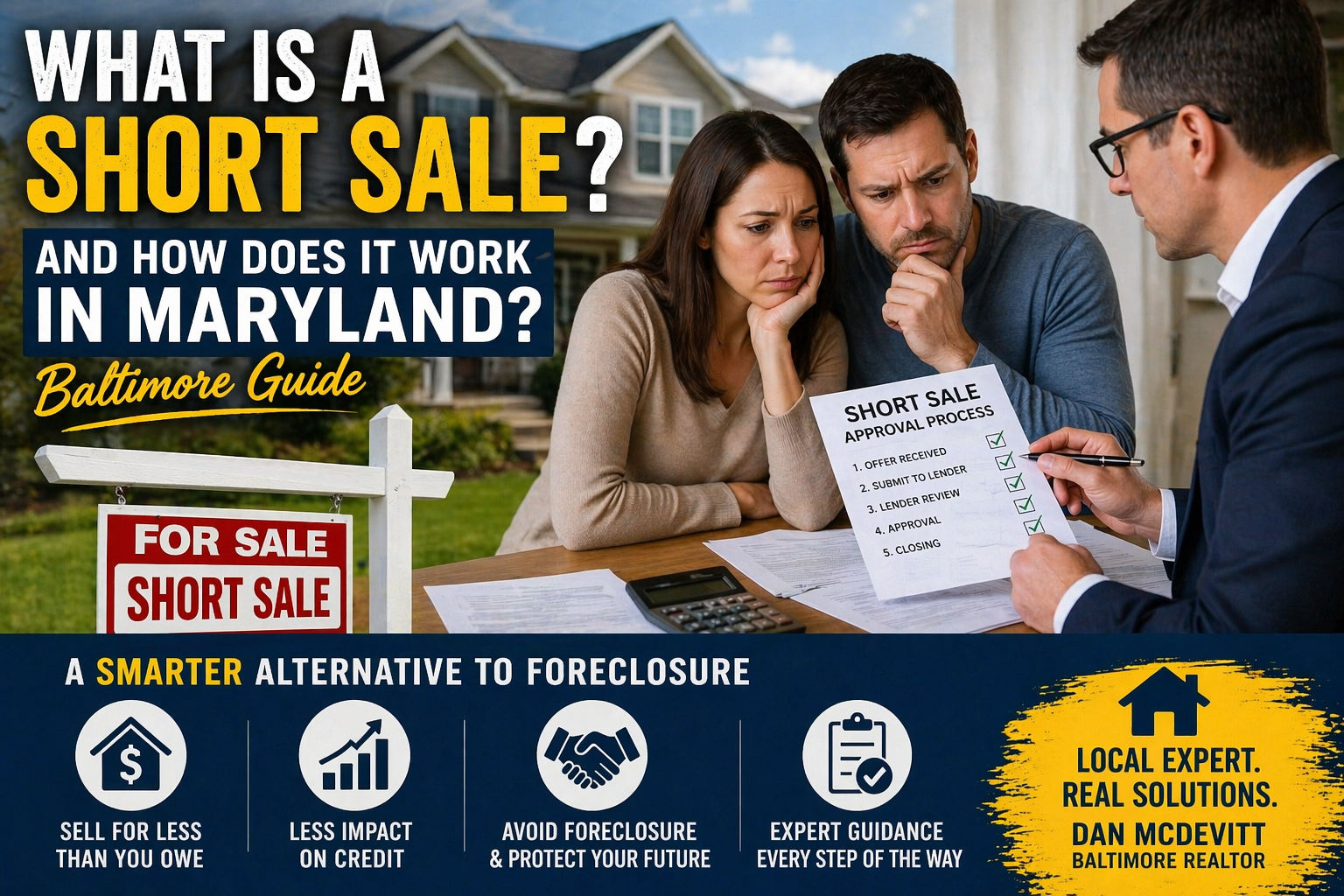
A short sale isn’t a failure—it’s a strategy. The problem is, most people don’t know that until it’s too late.
If you owe more on your house than it’s worth, you might feel stuck.
I talk to homeowners in the Baltimore, Maryland area all the time who are in this exact situation, and most of them think they only have two options:
Keep paying… or lose the house to foreclosure.
That’s not true.
There’s a third option that a lot of people don’t fully understand—a short sale.
As a Baltimore real estate agent who has helped homeowners navigate short sales for years, I’m going to break down what a short sale actually is, how it works in Maryland, and when it might make sense for you.
What Is a Short Sale?
A short sale is when you sell your home for less than what you owe on the mortgage—and the bank agrees to accept that lower amount.
👉 In simple terms:
You’re “short” on the payoff… and the lender approves it.
Example:
- You owe: $400,000
- Home value: $350,000
- Bank agrees to accept: $350,000
That’s a short sale.
Why Would a Bank Agree to This?
Because foreclosure is expensive.
When a bank takes a home through foreclosure, they often lose:
- Legal fees
- Holding costs
- Property condition issues
- Time
👉 In many cases, a short sale is the lesser loss
And that’s why lenders are often open to it—if it’s handled correctly.
How Does a Short Sale Work in Maryland?
Here’s the basic process:
- List the property for sale
- Receive an offer from a buyer
- Submit the offer to the lender
- Lender reviews financial hardship + property value
- Bank approves, denies, or negotiates
- Sale closes once approved
👉 The key difference from a normal sale:
The bank is involved in approving the deal.
Who Qualifies for a Short Sale?
Typically, you need to show a financial hardship, such as:
- Job loss or reduced income
- Medical issues
- Divorce
- Unexpected financial strain
👉 And most importantly:
The home is worth less than what you owe
Short Sale vs Foreclosure: What’s the Difference?
This is where things get real.
Short Sale:
- More control
- Less impact on credit
- Ability to plan your next move
Foreclosure:
- Forced process
- More damage to credit
- Less control over outcome
👉 Big takeaway:
A short sale is usually the cleaner exit.
What I’m Seeing Right Now in Baltimore
Here in the Baltimore real estate market, we’re starting to see:
- More homeowners feeling pressure from higher payments
- Some situations where values haven’t kept up with what people owe
- Early-stage distress that hasn’t turned into foreclosure yet
As a Baltimore Realtor specializing in short sales and distressed properties, I can tell you:
👉 Most people don’t realize they qualify for a short sale until it’s almost too late.
👉 Key Takeaway
A short sale isn’t giving up—it’s taking control before things get worse.
Dan’s Take
I’ve handled short sales since 2007, and I can tell you this:
Most people wait way too long to even look at the option.
They hope the market rebounds.
They try to hang on.
They avoid the conversation.
And I get it—it’s not an easy thing to face.
But the reality is:
👉 The earlier you explore a short sale, the more leverage you have.
The people who treat it like a strategy—not a last resort—almost always come out in a better position.
If you’re in a situation where you owe more than your home is worth, you’re not stuck—you just need to understand your options.
A short sale can be a powerful way to move forward without going through foreclosure, but it needs to be handled the right way from the beginning.
Every situation is different, and the best solution depends on your goals, your timeline, and your financial picture.
If you’re in the Baltimore area and want to understand whether a short sale makes sense for you, I’m here to walk you through it—no pressure, just real guidance.
I hope you found this information helpful. Every real estate situation is different, and sometimes a quick conversation can make all the difference. If you have questions or just want to understand your options, I'm always happy to help.
All the best,
Dan McDevitt
President, RealVolution Homes Group
Cummings & Company Realtors
Licensed in Maryland & Delaware
Real Estate Questions? Let's Talk.
📅 Schedule A Free 15 Minute Phone Call with DanOver 20 Years of Real Estate Experience
About Dan McDevitt
Dan McDevitt is a Baltimore-area Realtor with Cummings & Company Realtors and President of RealVolution Homes Group, licensed in Maryland and Delaware. With more than 20 years of real estate experience, Dan specializes in helping homeowners and families navigate complicated real estate situations brought on by major life events.
His experience includes probate and estate property sales, selling inherited homes, selling a parent's home using a power of attorney (POA), divorce-related property sales, foreclosure and pre-foreclosure situations, short sales, reverse mortgage properties, bankruptcy-related sales, and as-is home sales.
Dan serves Baltimore City, Baltimore County, Harford County, Anne Arundel County, Howard County, and Cecil County, while assisting clients throughout Maryland and Delaware.
Educational information only. This article is not legal, tax, financial, lending, or mortgage servicing advice. FHA HECM rules differ from those for proprietary reverse mortgages, and eligibility, deadlines, and payoff requirements must be confirmed with the servicer and appropriate professionals.